Written by Dr W Muller: 03/10/2020 | Last minor review: 11/01/2024 | Last major review: 20/03/2025 | Next mandatory review: Oct 2025
Exhaled Nitric Oxide
What is it?
FeNO stands for Fractional Exhaled Nitric Oxide
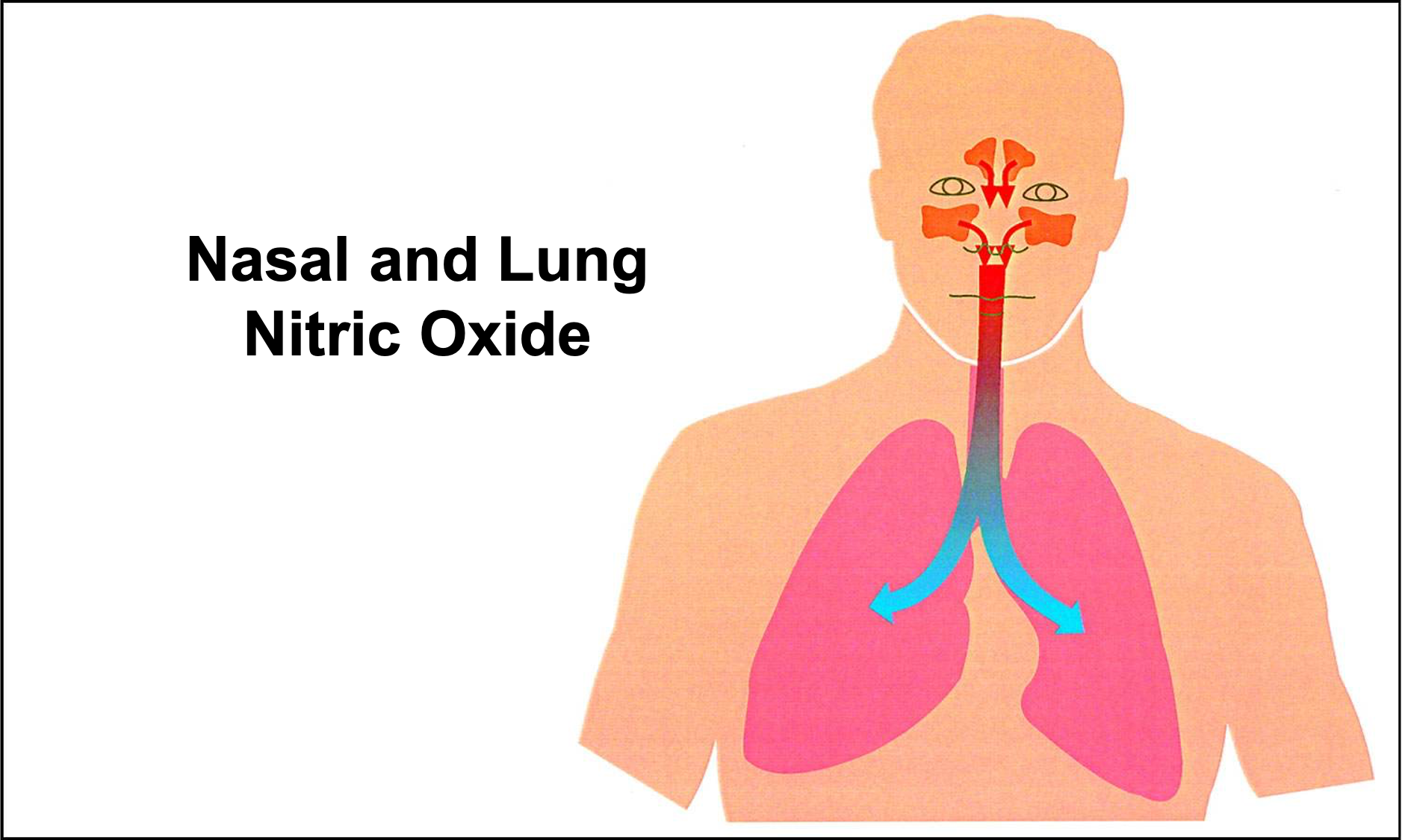
It is a simple breath test that measures the level of Nitric Oxide concentration that the body naturally produces in the airways and sinuses.
Why is it important?
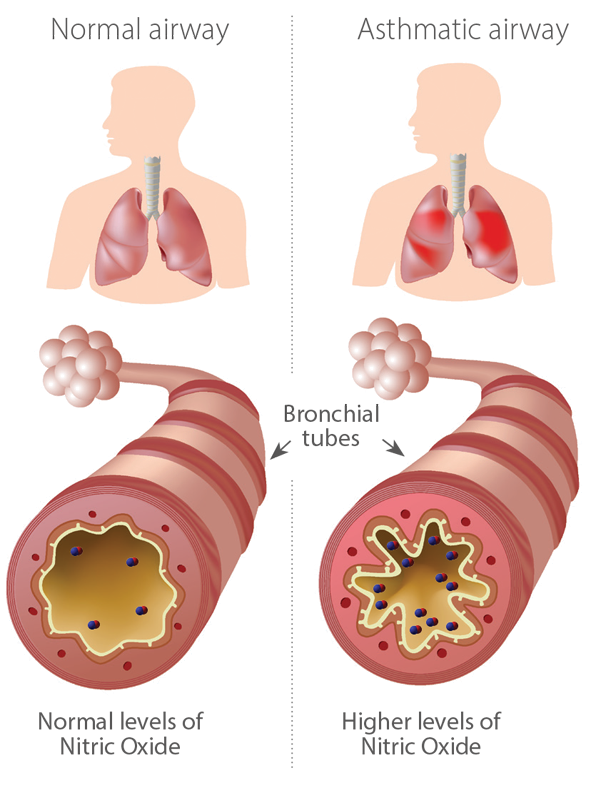
In an asthmatic person, the airways can become inflamed. Nitric Oxide is produced at a higher than normal concentration. This can be used as a biomarker of airway inflammation in people with asthma or allergic rhinitis.
The test is very simple to perform in minutes and easy to interpret with a single value reading in parts per billion (ppb). Unlike lung function testing, it requires minimal patient compliance and respiratory effort.
Children as young as 3 years can perform the test.
A positive FeNO reading in conjunction with spirometry and peak flow tests can help confirm a diagnosis of asthma or allergic rhinitis in a patient and/or support ongoing treatment for the disease.
How is it done?
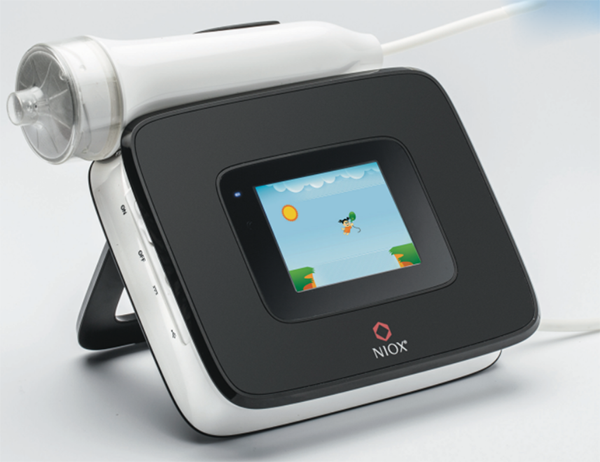
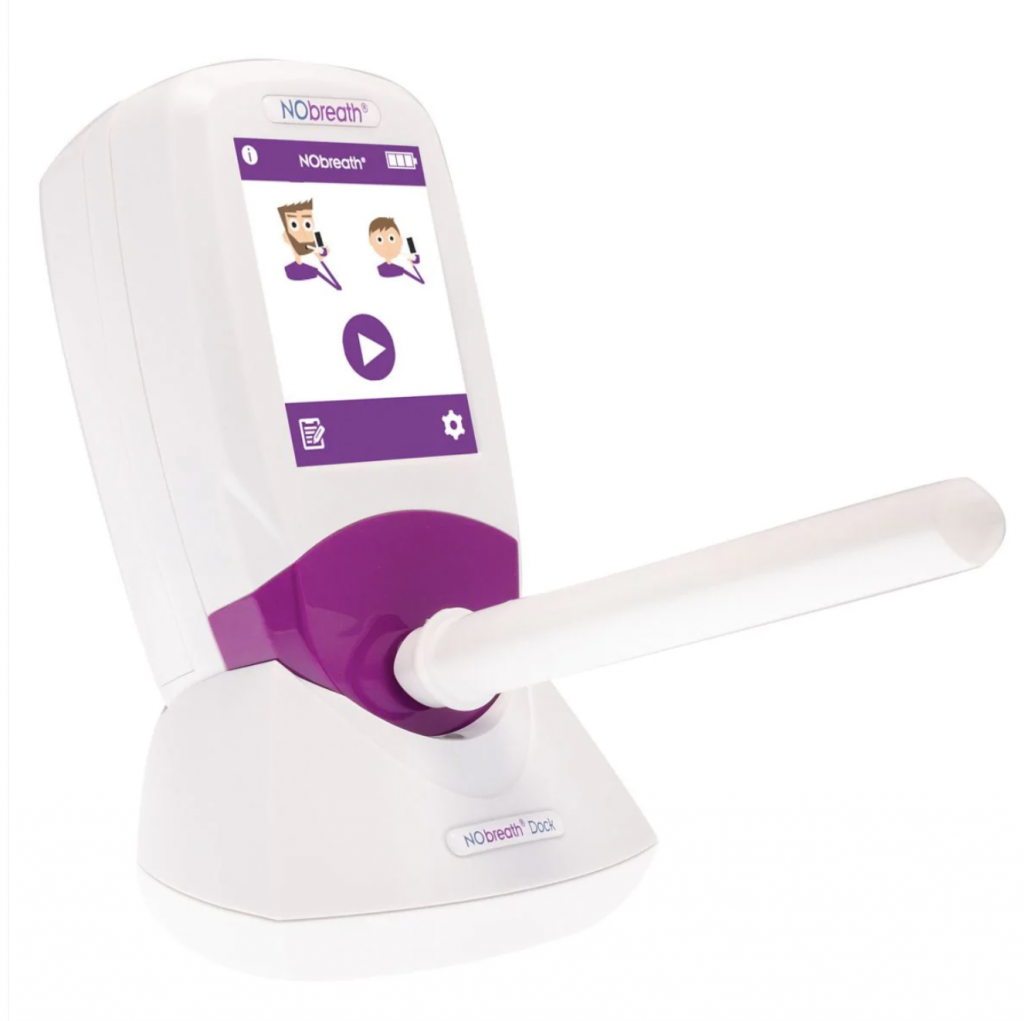
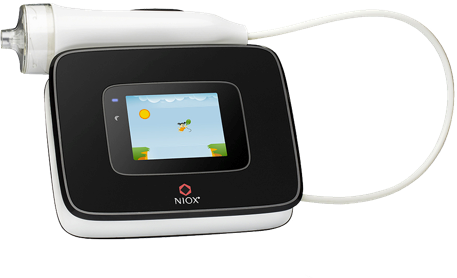
Children blow into a machine like the one shown in the picture. We often use an animation to encourage smaller and older children.
It requires smaller children to breath slowly for 6 seconds and older children for 10 seconds.
The result is instantly available,
Ai T, Luo R, Zhang L, Wang L, Liao H, Fan Y, et al. The FeNO Normal Value Analysis of Healthy Children Aged 6-15 Years Old in Chengdu. Indian J Pediatr. 2021 Aug;88(8):753–6.
Dweik RA, Boggs PB, Erzurum SC, Irvin CG, Leigh MW, Lundberg JO, et al. An official ATS clinical practice guideline: interpretation of exhaled nitric oxide levels (FENO) for clinical applications. Am J Respir Crit Care Med. 2011 Sep 1;184(5):602–15.
Evidence reviews for diagnostic accuracy of fractional exhaled nitric oxide (FeNO) measures: Asthma: diagnosis, monitoring and chronic asthma management (update): Evidence review F [Internet]. London: National Institute for Health and Care Excellence (NICE); 2024 [cited 2025 Mar 20]. (NICE Evidence Reviews Collection). Available from: http://www.ncbi.nlm.nih.gov/books/NBK612038/
Asthma: diagnosis, monitoring and chronic asthma management (BTS, NICE, SIGN) [Internet]. London: National Institute for Health and Care Excellence (NICE); 2024 [cited 2025 Mar 8]. (National Institute for Health and Care Excellence: Clinical Guidelines). Available from: http://www.ncbi.nlm.nih.gov/books/NBK611968/
What does it mean?
5-17 years: 20-34 ppb is borderline and >=35 ppb is raised
>17 years:25-49 ppb is borderline and >=50 ppb is raised
Borderline: “If you have symptoms, medication may help” Raised: “Your airways are inflamed and medication can improve your symptoms”